Better Machines, Worse Work?
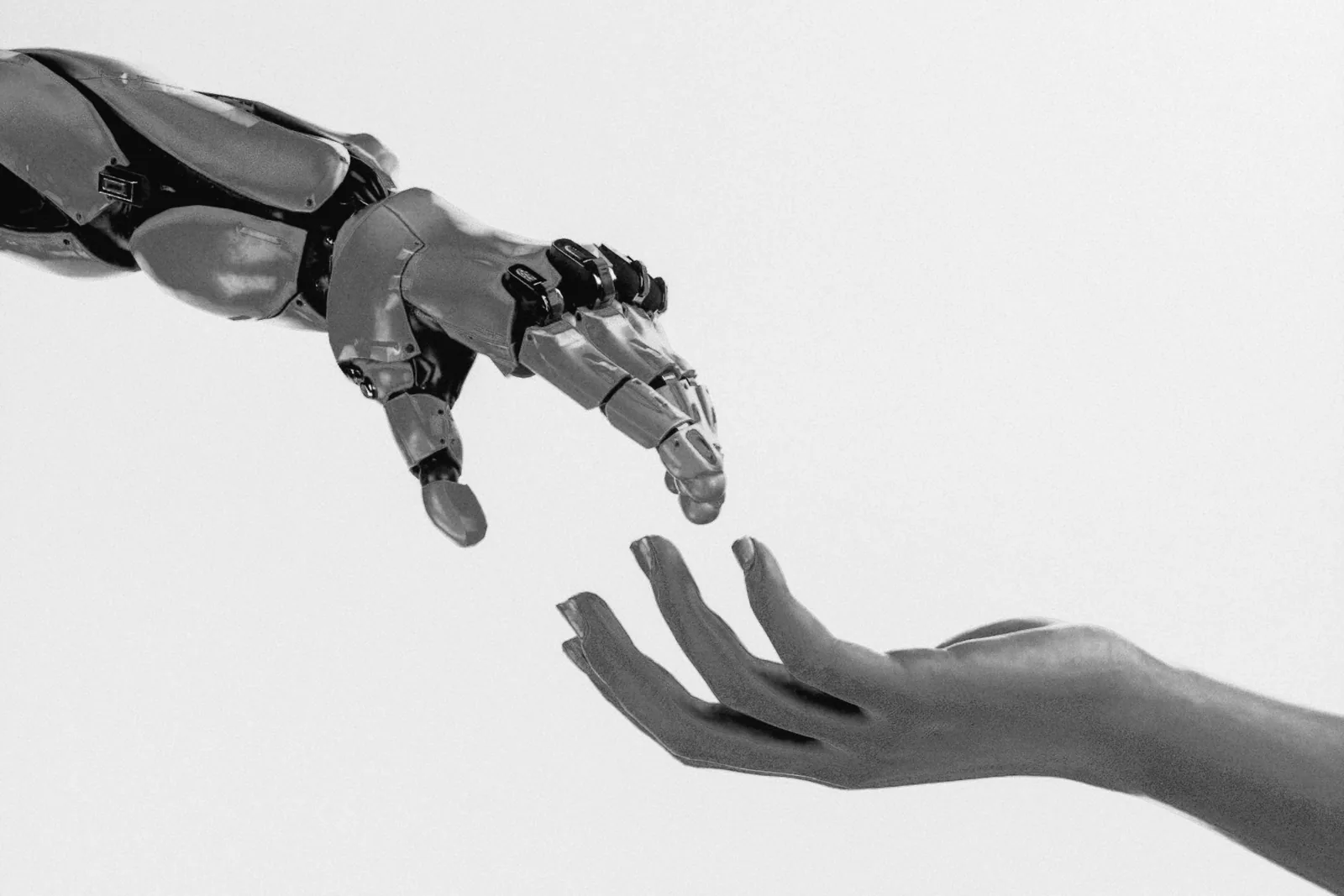
Photo: Cash Macanaya / Unsplash
In 2020, I wrote an essay contesting Michele Loi's claim that digital technology quietly makes working life worse. Six years later, generative AI is proving us both right — in unexpected ways.
That artificial intelligence is taking over parts of the doctor's work long before it reaches the plumber is, in 2026, a commonplace; in 2020, the same sentence was still a provocation. What remains far from obvious is what this pattern does to the quality of the work that is left to us.
The doctor goes first not because diagnosing illness is easy, but because it is, at its core, pattern recognition. And pattern recognition is precisely what machines do best. Crawling under a sink, by contrast — improvising in a cramped, unpredictable, physical world — remains one of the hardest problems in robotics. Roboticists call this inversion the Moravec paradox: what we find hard, machines find easy; what we find effortless, machines find nearly impossible.
I first encountered this idea in 2020 — three years before ChatGPT made it common knowledge. I was writing an essay on a paper by the philosopher Michele Loi with a deliberately unsettling title: Technological Unemployment and Human Disenhancement. Rereading that essay now is a peculiar experience: the future it argued about is beginning to arrive — and it is taking sides.
An argument designed to disturb
The enhancement debate usually asks how technology makes us more: stronger, smarter, longer-lived. Loi turns the telescope around. What if digital technology, viewed across society as a whole, makes most working lives less?
His crucial move is a distinction that sounds academic and turns out to be a blade. Technology can enhance us functionally — increase what we are able to do — without enhancing us in a welfarist sense: improving our prospects of actually living a good life. The two come apart more often than we like to admit. Marx saw it in the factories of the nineteenth century: the machine that supposedly relieved the labourer transformed varied craft into monotonous servitude, until the worker became — his phrase — a “living appendage” of the machine. More capability in the system; less life in the work.
Loi's claim is that digital technology repeats this pattern at scale. Economists call one symptom job polarisation: demand grows at the top and bottom of the labour market while the middle — the decent, respectable, load-bearing middle — hollows out. Fold in the Moravec paradox, and the conclusion turns uncomfortable. Automation does not politely start with the jobs nobody wants. It starts with the jobs that happen to be computable. And those are often the pleasant ones.
He gives the comfortable counter-story a name: the humanistic fallacy. It's the belief that whenever machines take over a task, humans are automatically promoted to something better. Comparative advantage does guarantee that people and machines each end up doing what they do relatively best. It guarantees nothing about whether what remains for people is good work. “Whatever is left for humans” and “what is good for humans” are two different sets — and nothing in economics forces them to overlap.
Where I pushed back
My essay conceded the argument's elegance and then attacked its fatalism, on three fronts.
Faster is not different. Much of what Loi cast as a rupture looked to me like acceleration. An actor streaming to millions is not doing a different kind of work than an actor on a village stage; the craft is identical, only the reach has exploded. Every previous wave of automation shifted work rather than abolished it. A change in speed, however dramatic, is not yet a change in kind.
The child fell into the well long ago. Marx described how industrialisation threw the worker into the well — how craft became drudgery. The optimistic economists who came after him, Goldin and Katz among them, described how conditions down in the well were gradually improved: safer, brighter, more ergonomic. Notice what nobody had described: getting the child out. My hopeful reading in 2020 was that digital automation might be the first technology capable of exactly that — of swallowing the monotonous work that industrialisation itself created.
The “handmade” objection. Loi's model assumes work migrates wherever machines hold the cost advantage. But walk through any market and you'll see price tags contradicting him: we pay more for the handmade, for the imperfect, for the human. Comparative advantage is a statement about cost. Value is a statement about us. Which tasks we surrender to machines is not an equation waiting to be solved — it is a decision waiting to be made.
That was my deepest objection, really: Loi's argument hums with technological determinism, as if the future of work were a script already written. I didn't believe it then. I believe it less now — for reasons the data makes surprisingly vivid.
The canaries are singing
Six years on, the evidence has split into two stories that appear, at first glance, to contradict each other.
Story one: nothing is happening. Yale's Budget Lab combed through 33 months of labour-market data following ChatGPT's release and found no discernible disruption in the aggregate — the occupational mix is shifting no faster than in previous technology waves. The great AI jobs apocalypse, measured across the whole economy, simply isn't in the numbers.
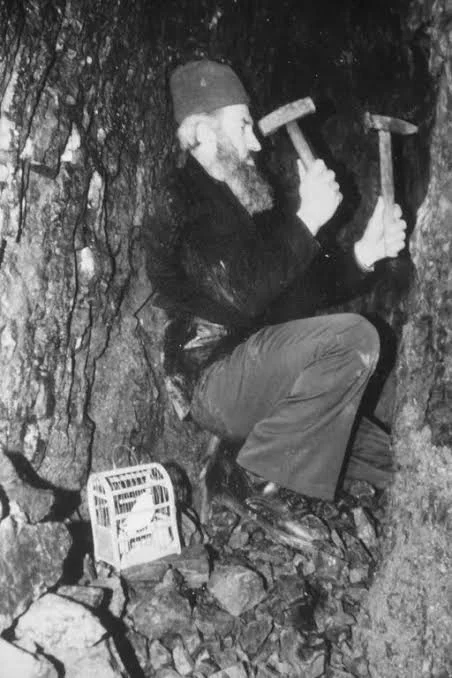
Story two: something is happening exactly where Loi pointed. A Stanford team around Erik Brynjolfsson gave their study a title that is its own thesis — “Canaries in the Coal Mine?” They found that since late 2022, employment of 22-to-25-year-olds in the most AI-exposed occupations — software development, customer service — has measurably declined, even as older workers in the same occupations gained ground. And the detail that matters most: the losses cluster where AI automates work, not where it augments it. Loi's distinction between functional gain and welfarist loss, once a seminar-room abstraction, is now legible in payroll data.
The PwC 2026 AI Jobs Barometer completes the picture: roles where AI deepens human expertise are growing roughly twice as fast as roles where AI merely simplifies work — and the simplified roles are falling behind on wages, too. Entry-level positions increasingly demand senior-level judgment from day one. The career ladder still stands. It's the bottom rungs that are quietly being sawn off.
Both stories are true — and that is precisely the point: the averages are calm because the disruption is surgical. Aggregate statistics were built to detect floods, not incisions.
What the essay got right — and what we still get to decide
So, was Loi right? In the way that matters most, yes: he warned that technology can degrade the quality and accessibility of good work while every headline number stays green. That is not a prophecy anymore. It is a description.
But my old objection has only gained force. The Stanford data shows the damage concentrating where companies choose automation over augmentation — and choices, unlike paradoxes, can be revisited. The premium we place on human-made work is a choice. How we rebuild the entry-level rung — through education, job design, social policy — is a choice.
Loi was right to distrust the humanistic fallacy: better machines do not automatically produce better lives. But the correct response to a fallacy is not fatalism; it is judgment. The child is still in the well. Whether AI becomes the rope that finally pulls it out, or merely another stone dropped in after it, was never going to be decided by the technology.
It will be decided by us.
Sources
- Michele Loi, “Technological Unemployment and Human Disenhancement” (Ethics and Information Technology)
- Brynjolfsson, Chandar & Chen, “Canaries in the Coal Mine?” (Stanford Digital Economy Lab)
- Yale Budget Lab — labour-market data since ChatGPT's release
- PwC Global AI Jobs Barometer 2026

Lucas Bareis, Account Manager at Serviceplan Suisse in Zürich. Writes about strategy, customer journeys, SEO/GEO and digital ethics, with a background in media management and a master's degree in philosophy.